Italian Property Investment: Rental Yields, Returns and Opportunities
Italy remains one of Europe's most compelling property investment destinations. Its blend of world-class tourism, cultural heritage, and diverse property stock creates income opportunities ranging from city centre short-lets to rural agriturismo ventures. Here is our analysis of the investment landscape for 2025.

The Case for Italian Property Investment
Italy attracted 57 million international tourist arrivals in 2023, making it one of the top five most visited countries on earth. This extraordinary tourism economy underpins property rental demand in virtually every corner of the country—from the Grand Canal in Venice to the trulli of Puglia and the thermal baths of Saturnia. For property investors, this creates a deep and resilient short-term rental market that few other European countries can match.
Beyond tourism, Italy's urban rental market is characterised by structural undersupply. Years of restrictive rent control in major cities—Rome, Milan, Florence, Bologna—have suppressed the supply of quality rental property, creating strong demand and premium pricing for well-located, well-presented units. The liberalisation of short-term rental regulations through platforms such as Airbnb has opened new income channels for property owners in historic city centres.
Capital growth prospects vary significantly by location. Prime areas—central Florence, Lake Como lakefront, Capri, Portofino, and prime Chianti—offer limited supply and enduring international demand. These markets have delivered solid long-term capital appreciation. In contrast, rural areas in the deep south—while offering compelling yields—have seen more modest capital growth.
Short-Term vs Long-Term Rentals
The choice between short-term (holiday) and long-term (residential) rental strategies involves different risk profiles, management requirements, and tax treatments.
Short-term rentals (stays under 30 days) command a significant premium over long-term rates—often 3–5 times the monthly equivalent. In high season, a well-located Florentine apartment can generate more in a week than in a month on a long-term contract. However, short-term rentals require active management: regular turnover, cleaning between guests, key exchange, marketing, and maintenance. Platform fees from Airbnb or Booking.com typically absorb 15–20% of gross income.
Long-term rentals offer steadier, more predictable income with lower management overhead. However, Italian tenancy law (the locazione) provides significant protections for tenants and can make eviction of problematic tenants time-consuming and costly. Standard residential tenancy contracts run for four years, automatically renewable for another four. The agreed-rent (canone concordato) structure in some cities offers lower rental rates in exchange for reduced tax under the cedolare secca regime.
Rome: Capital City Rental Returns
Rome is Italy's largest city and its most visited, with over 20 million tourist arrivals annually. The short-term rental market in central Rome—particularly in the historic centre (Centro Storico), Trastevere, Prati, and Parioli—is exceptionally strong. A well-presented one-bedroom apartment in Trastevere can generate €1,200–€2,000 per week in peak summer, with occupancy of 70–85% achievable year-round given Rome's status as a year-round destination.
Gross short-term rental yields in Rome's historic centre typically range from 5% to 8% on purchase price. Net yields, after platform fees, management costs, and taxes, are typically 3.5–5.5%. Long-term yields are lower—typically 3–4% gross in the centro storico—reflecting the premium acquisition costs of central Roman property.
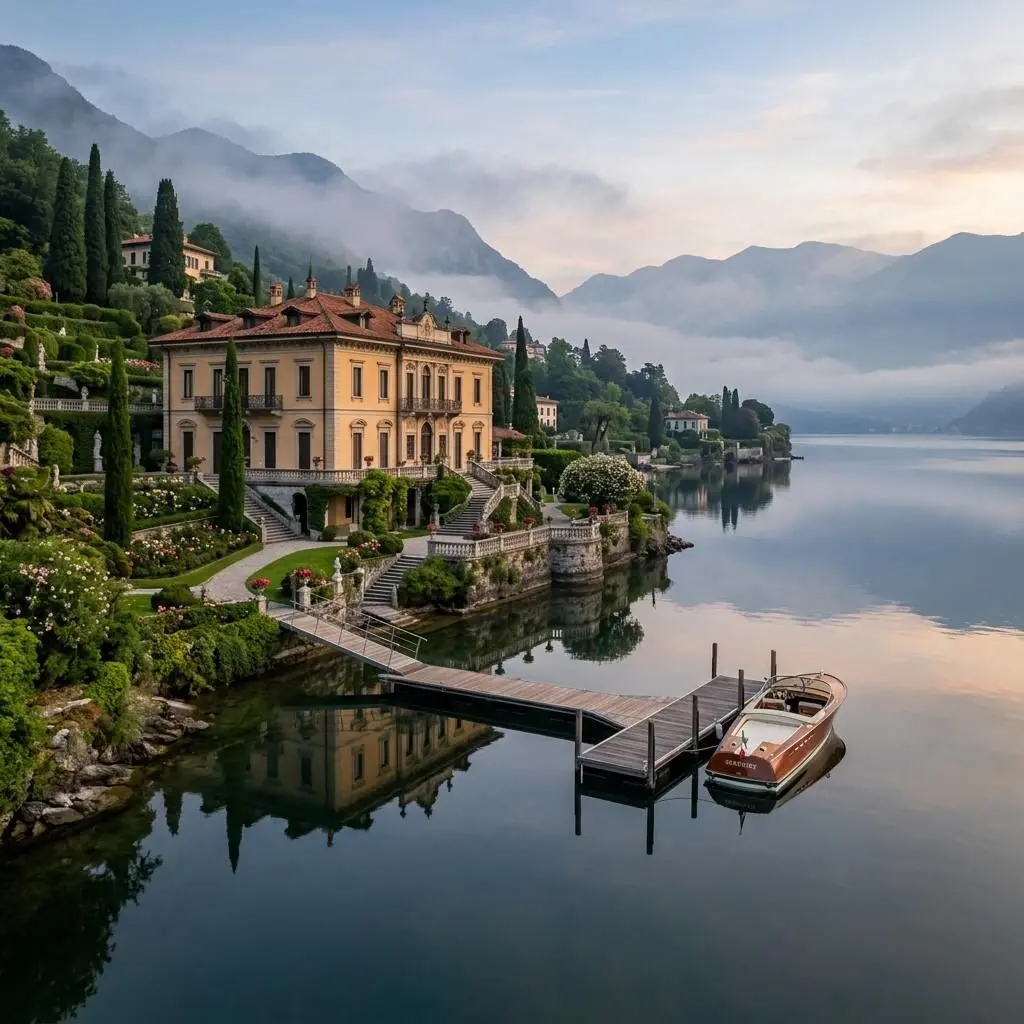
Lake Como commands some of Italy's highest rental rates, attracting affluent international visitors year-round.
Tuscany: The Agriturismo Model
Tuscany's countryside accommodation sector is built on the agriturismo model—farms and rural properties that offer accommodation alongside food, wine, and authentic rural experiences. This model benefits from a dedicated regulatory framework that allows agricultural properties to generate hospitality income under favourable tax conditions.
A well-run agriturismo in the Chianti or Val d'Orcia—with pool, vineyard or olive grove, and several guest rooms or self-contained units—can generate €150,000–€400,000 gross annual income in a strong season. Occupancy during the shoulder season (April–May and September–October) has grown significantly as international visitors seek alternatives to peak-season crowding.
For individual Tuscan holiday villas, peak weekly rates of €3,000–€12,000 are achievable for a four-to-six bedroom property with pool and countryside views. Annual gross rental income of €50,000–€150,000 is realistic for a well-marketed Tuscan villa in a premium location, with net yields typically in the range of 4–6% on purchase price.
Amalfi Coast and Southern Italy: High Yield, High Seasonality
The Amalfi Coast, Positano, Ravello, and the Cilento represent some of Italy's most dramatic and desirable real estate. Property values are high—prime positions above the coast command prices exceeding €10,000 per sq m—and rental rates reflect the location's global prestige. A clifftop villa with pool and sea views can generate €20,000–€50,000 per week at peak season.
Puglia offers a compelling value proposition by comparison. The relatively recent discovery of Puglia by international tourists—particularly the trulli heartland of the Valle d'Itria and the baroque beauty of Lecce—has created a property market still at an early stage of international demand. Acquisition costs are modest; rental yields are strong; and capital growth potential, as awareness of the region grows, is significant.
Sicily similarly offers compelling investment fundamentals. UNESCO heritage sites, extraordinary natural scenery (Etna, Aeolian Islands, Valle dei Templi), and rapid growth in international air connections have transformed the island's tourism profile. Property acquisition costs remain well below those of northern Italy, while short-term rental demand is accelerating.
Lake Como: The Luxury Rental Market
Lake Como is Italy's most exclusive lakefront property market and one of the most internationally recognised luxury destinations in Europe. George Clooney's long-tenure at Villa Oleandra in Laglio has been merely the most famous chapter in a centuries-long tradition of international celebrities and aristocrats maintaining Lake Como residences.
Lakefront villas and historic palazzi on the "golden triangle" between Bellagio, Tremezzo, and Varenna command some of the highest property values in Italy—routinely exceeding €10,000–€20,000 per sq m. Weekly rental rates for premium lake properties range from €15,000 to €100,000, attracting an affluent international clientele. Net yields are typically modest (2–4%) given high acquisition costs, but capital preservation and prestige value are the primary attractions.
Managing Your Investment from Abroad
Effective property management is the foundation of successful Italian property investment. For short-term rentals, working with a professional property management company—many specialising in international investor clients—is strongly advisable. Costs typically range from 20–30% of gross rental income, covering marketing, booking management, key exchange, cleaning coordination, and maintenance.
Italian short-term rental regulations require registration on the national SIRTU (Sistema Informatico di Raccolta delle Informazioni sul Turismo Unificato) platform and compliance with municipal tourist tax (tassa di soggiorno) collection requirements. Regulations vary by municipality and are evolving; staying current with local requirements through your property manager or commercialista is essential.
To explore investment properties for sale in Italy across all regions and budgets, browse our current listings. For a comprehensive understanding of the purchase process and associated costs, read our complete guide to buying property in Italy.