Renovating Property in Italy: A Practical Guide for Buyers
Italy's stock of historic, characterful properties is unmatched in Europe. For buyers prepared to take on a renovation project, extraordinary homes await at prices well below comparable finished properties. Here is everything you need to know before you begin.

Why Renovation Projects Appeal to International Buyers
Italy has an extraordinary number of abandoned or neglected historic properties, particularly in rural areas. Decades of depopulation from the countryside—as younger generations moved to cities—left a legacy of unoccupied farmhouses, small villages with empty homes, and crumbling agricultural buildings with remarkable bones. For international buyers with vision and capital, these properties represent a unique opportunity.
The appeal is multifaceted. Renovation projects typically sell at significant discounts to finished properties—often 40–60% below the value of an equivalent renovated home. The opportunity to design the interior exactly to your specification, using authentic Italian materials and craftsmen, creates a property with genuine personality. And the process itself—however demanding—is deeply rewarding, connecting you to the fabric of Italian culture and community in ways that a turnkey purchase never can.
Several Italian municipalities have also launched incentive programmes offering properties for €1 to attract new residents willing to invest in renovation. These programmes, active in towns including Mussomeli in Sicily, Sambuca di Sicilia, Gangi, and various Abruzzo villages, attract significant international interest—though the "€1 house" headline invariably understates the total renovation commitment required.
Types of Italian Properties Suitable for Renovation
Understanding what you are dealing with matters before committing. Italian renovation properties fall into several broad categories:
Casali and Rustici – Traditional rural stone farmhouses, often with agricultural outbuildings and land. These represent the archetype of the Italian renovation project and are found throughout Tuscany, Umbria, Marche, and Piedmont. Structural quality varies enormously; many were built to a high standard over centuries, while others require complete rebuilding.
Trulli – The distinctive conical-roofed limestone dwellings of Puglia, concentrated around Alberobello and the Valle d'Itria. Trulli have been popular with international buyers for over two decades. A single trullo can be purchased for under €50,000; a complex of multiple trulli with land typically sells for €100,000–€350,000 unrenovated.
Town and Village Apartments – In small Italian towns across every region, historic apartments in medieval palazzi can be purchased at modest prices. These typically require full modernisation—new plumbing, electrical systems, insulation, kitchens, and bathrooms—but offer urban convenience at rural prices.
Sassi di Matera–style cave dwellings – Unique to Basilicata and parts of Puglia, these rock-carved habitations have become UNESCO World Heritage sites and attract adventurous buyers seeking truly unique properties.
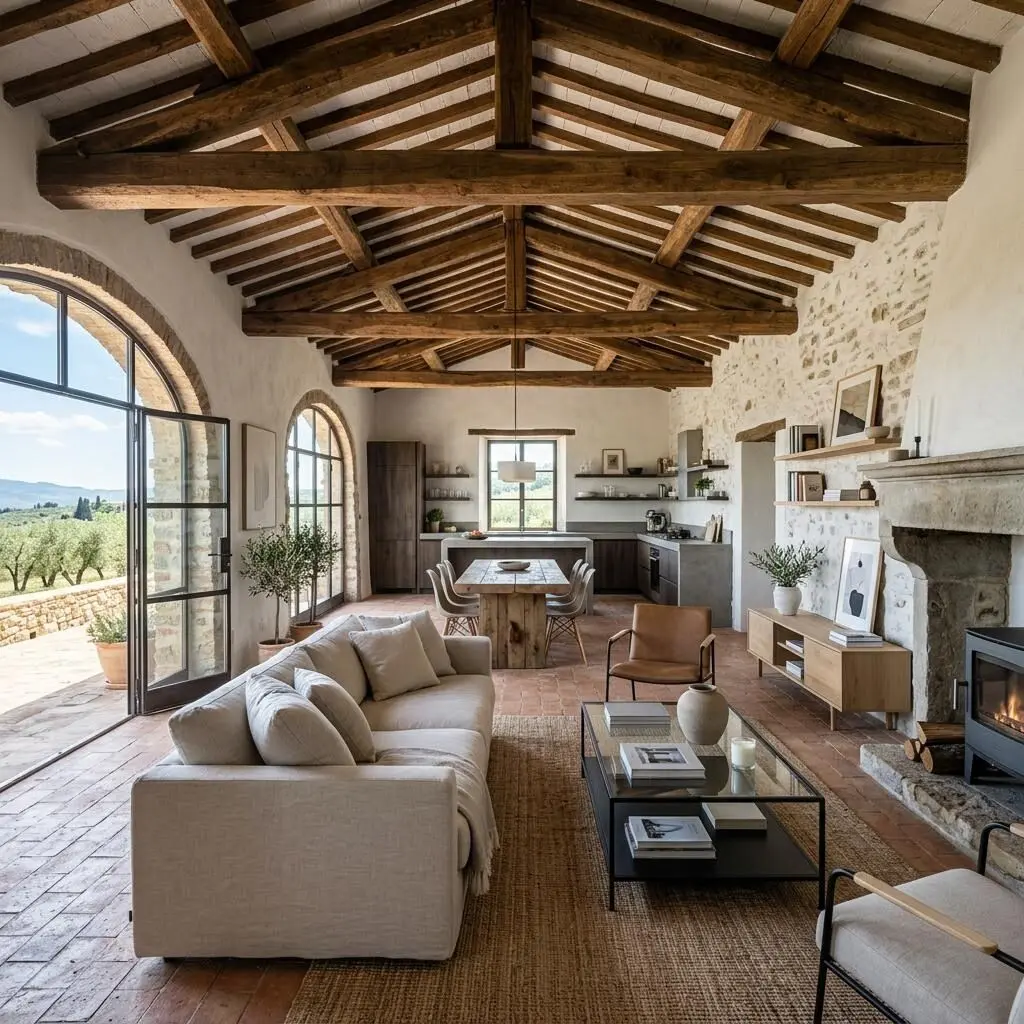
A finished renovation: exposed beams, terracotta floors and whitewashed stone walls are hallmarks of the authentic Italian aesthetic.
Understanding Italian Planning Permission
Italian planning law is complex and operates at three levels: national, regional, and municipal. Any significant renovation work requires formal approval, and the permits required depend on the nature and scale of the work. Understanding the permit system before purchasing is essential—some renovation projects are straightforwardly approved, while others face legal, conservation, or zoning constraints that can stall or block works.
CILA (Comunicazione di Inizio Lavori Asseverata) – A lighter-touch notification process for minor works such as internal remodelling, cosmetic renovations, and non-structural changes. Filed by a qualified geometra or architect before works begin.
SCIA (Segnalazione Certificata di Inizio Attività) – Required for more significant works including changes to internal layouts, installation of new bathrooms, and some structural repairs. Self-certifying but more detailed than CILA.
Permesso di Costruire – A full planning permission required for major structural works, extensions, new buildings, and demolition. This is a formal application to the local municipal authority (Comune) and can take several months to process.
If the property is in a conservation zone, near a listed building, or within a national park or protected landscape (vincolo paesaggistico), additional approvals from the Soprintendenza—Italy's heritage authority—are required. These can add significantly to both cost and timeline.
Renovation Costs in Italy
Renovation costs in Italy vary significantly by region, property type, specification, and the state of the original structure. As a general guide:
- Basic renovation (new electrics, plumbing, plastering, painting): €600–€900 per sq m
- Mid-range renovation (full remodel with new kitchen, bathrooms, flooring): €900–€1,500 per sq m
- High-specification renovation (bespoke finishes, underfloor heating, pool, landscaping): €1,500–€2,500+ per sq m
These figures are indicative for central and northern Italy; costs in the south (Sicily, Puglia, Calabria) tend to be 20–35% lower. Budget at the higher end for conservation areas, rural locations with difficult access, or properties with structural issues.
A realistic renovation budget should include a contingency of at least 20%—preferably 30% for older rural properties. Italian renovations almost invariably reveal unexpected complications: illegal extensions requiring legalisation, asbestos in roof materials, non-compliant drainage, or boundary disputes.
Finding Reliable Contractors
Finding trustworthy, skilled contractors is often cited as the greatest challenge of Italian property renovation, particularly for foreign buyers. Recommendations from other international buyers, your estate agent, or a local English-speaking architect are the most reliable sources of contractor leads.
Appointing a local project manager (direttore dei lavori) or an English-speaking architect to oversee the works is strongly advisable for foreign buyers. The project manager coordinates all trades, manages permits and sign-offs, ensures quality control, and handles the inevitable complications. Their fee—typically 10–15% of the total build cost—is generally excellent value given the complexity of managing an Italian renovation remotely.
Tax Incentives for Italian Renovation
Italy offers generous tax deductions for renovation expenditure. Under Italian law (Article 16-bis TUIR), qualifying renovation works attract a 50% income tax deduction on expenditure up to €96,000 per property unit, spread over ten years. This applies to resident taxpayers; non-resident owners who pay Italian tax on rental income can also access this deduction.
Italy's Superbonus scheme—originally providing a 110% tax deduction for major energy efficiency improvements—has been scaled back significantly since its peak in 2021–2023. The current rate for eligible works is 65% and applies to specific energy efficiency improvements. Given the complexity and evolving nature of Italian incentive schemes, specialist advice from an Italian commercialista is essential before planning renovation expenditure.
For buyers seeking a rural property or renovation project in Italy, our listings include a range of opportunities across Tuscany, Umbria, Puglia and beyond. Once renovated, understanding your ongoing tax obligations is equally important—read our complete Italian property tax guide to plan your ownership costs.